Balance and coordination exercises
Balance and coordination exercises in the Fitness Coach catalogue: 154 exercises. Mostly for: Legs, Quads, Glutes.
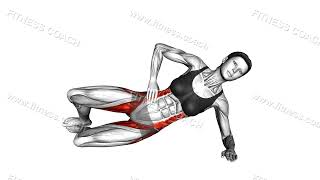
Glutes · Beginner
Side Plank Clamshell (Moving Trunk)
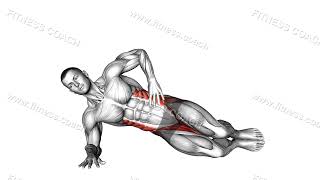
Combines repeated upper-knee opening with additional visible trunk movement in a supported side-plank position. This differs from the related variation that keeps the trunk comparatively steady.
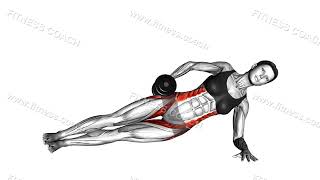
Core · Beginner
Dumbbell Side Bridge (To Straight Line)
A dynamic hip lift in side support with a dumbbell held at the upper hip. The demonstrated rise ends around straight body alignment before the pelvis lowers again, giving it a shorter range than the related high-raise variation.
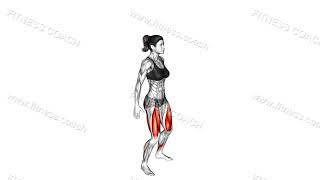
Legs · Intermediate
Jump Squat (Feet Turned Out)
Combines a bodyweight squat with a vertical jump to train lower-body power and landing control. The feet and knees are oriented more outward in this demonstrated variation. The quadriceps, glutes and calves contribute to take-off, while the trunk helps maintain balance.
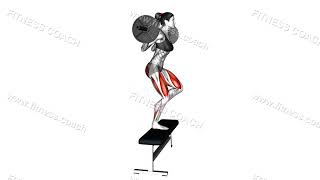
Legs · Beginner
Barbell Step-Up (Floor Start)
A lower-body strength exercise with a barbell across the upper back and a raised bench. Both feet return to the floor between repetitions, unlike the variation with the working foot kept on the bench. The quadriceps and glutes drive the ascent, while the trunk and pelvis control balance.
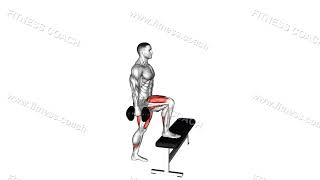
Legs · Beginner
Dumbbell Step-Up (Foot on Bench Start)
A loaded step-up with the working foot already supported on the bench. Unlike the floor-start variation, the working foot stays on the bench between repetitions. Dumbbells at the sides add resistance to the quadriceps and glutes while the trunk and pelvis maintain balance.
Legs · Intermediate
Barbell Bulgarian Squat
A unilateral lower-body exercise with the rear foot elevated on a bench and a barbell across the upper back, building single-leg strength, balance, and quad and glute development.
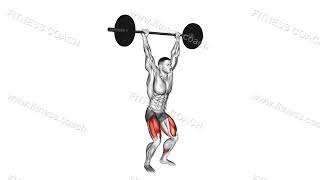
Legs · Advanced
Barbell Overhead Squat
An advanced full-body squat variation with the barbell held overhead. It combines lower-body strength with shoulder mobility, trunk stability, balance, and coordination.
Glutes · Beginner
Glute Bridge Single Leg
An advanced variation of the traditional glute bridge exercise that targets the gluteal muscles, hamstrings, and core. By performing the exercise on one leg, it increases the demand on balance and stability, enhancing unilateral strength and muscle activation.
Shoulders · Advanced
Handstand Hold
An advanced bodyweight exercise that primarily targets the shoulders, arms, and core. It involves balancing the body upside down with hands placed on the ground and feet elevated, requiring strength, stability, and control.
Legs · Advanced
Running
A cardiovascular exercise that involves moving at a steady pace on foot. It enhances cardiovascular endurance, burns calories, and strengthens muscles, particularly in the legs and core. Running can be performed on a treadmill or outdoors and is adaptable to various fitness levels.
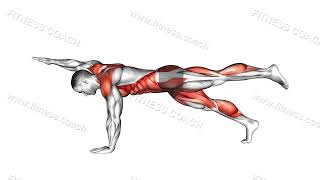
Shoulders · Beginner
Bird Dog Plank
A core-stability variation that combines a plank position with bird-dog-style limb control. It develops the core, glutes, shoulders, balance, and coordination.
Legs · Beginner
Cable Step Up
The Cable Step-Up is a lower body exercise that targets the quadriceps, hamstrings, glutes, and calves. It involves stepping onto an elevated platform while holding a cable attachment for resistance, promoting balance, coordination, and strength.
Legs · Intermediate
Lunges
A compound lower-body exercise that targets the quadriceps, hamstrings, glutes, and calves. This exercise also engages the core for stability and balance. Lunges can be performed with body weight or additional resistance such as dumbbells or a barbell.
Glutes · Beginner
Bird Dog
A core stability movement that targets the lower back, abdominals, and glutes. It enhances balance, coordination, and overall core strength by requiring simultaneous extension of opposite limbs while maintaining a neutral spine.
Legs · Intermediate
Dumbbell Lunges
A compound lower body exercise that targets the quadriceps, hamstrings, glutes, and calves.
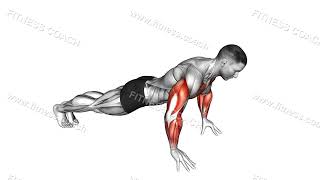
Chest · Intermediate
Finger Push-Up
An advanced bodyweight push-up variation supported on the fingertips. It combines upper-body pushing work for the chest, shoulders, and triceps with substantial finger, hand, and forearm loading.
Legs · Intermediate
Sumo Squat off Stepbox
A lower body exercise that targets the quadriceps, hamstrings, glutes, and inner thighs. By performing this squat variation on a stepbox, you increase the range of motion and engage stabilizing muscles for improved balance and strength.
Abs · Beginner
Ankle Taps
The lying torso twist is an abdominal exercise that targets the oblique muscles. It involves rotating the lower body while keeping the upper body stable, enhancing core strength and flexibility.
Shoulders · Intermediate
Pike Push-Up On Bench
Puts the feet on a bench while the hands stay on the floor, which lifts the hips higher in the inverted-V position and brings the press closer to vertical than a floor pike push-up.
Legs · Beginner
Side Leg Swings
A dynamic stretching exercise that targets the hip flexors, abductors, and adductors. This movement helps improve flexibility, balance, and prepares the lower body for more intense physical activity.
Glutes · Beginner
Side Plank Clamshell (Stable Trunk)
Combines a supported side-plank position with repeated opening of the upper knee. The trunk stays comparatively steady while the hip moves, distinguishing it from the related moving-trunk variation.
Legs · Intermediate
Sissy Squat
An advanced lower body exercise that primarily targets the quadriceps, while also engaging the core and hip flexors. It is performed with a focus on maintaining a straight line from the knees to the shoulders, emphasizing knee flexion and extension.
Triceps · Advanced
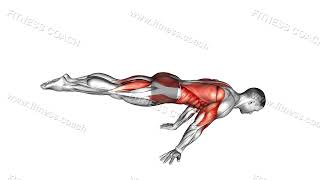
Full Planche Push-Up
An advanced calisthenics pushing exercise performed while the body is held horizontally on the hands. It demands exceptional shoulder, chest, triceps, core, and straight-arm strength.
Legs · Intermediate
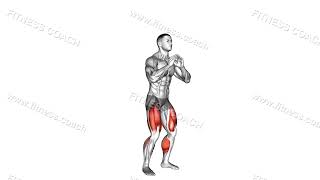
Jump Squat (Feet Forward)
Combines a bodyweight squat with a vertical jump to train lower-body power and landing control. The feet and knees face more forward in this demonstrated variation. The quadriceps, glutes and calves contribute to take-off, while the trunk helps maintain balance.


