Bodyweight exercises
Moves that need nothing but floor space — sometimes a bar or a bench — covering legs, abs, chest and the rest of you.
298 exercises, 13 pages
Filters in the catalogue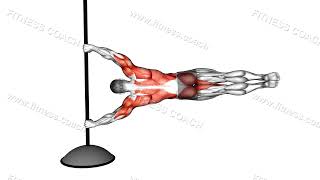
Core · Advanced
Flag
An advanced sideways bodyweight hold on a vertical pole with the body and joined legs extended horizontally. The upper and lower arms provide opposing support while the trunk resists sideways bending and rotation.
Abs · Intermediate
Suspension V-Ups
An advanced core exercise that combines the benefits of suspension training with the dynamic movement of a V-up.
Shoulders · Advanced
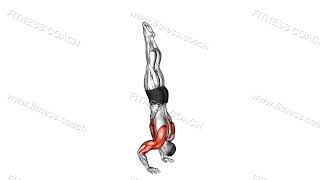
Handstand Push-Up
A freestanding inverted bodyweight press for the shoulders and triceps. The demonstrated variation combines repeated elbow extension with whole-body balance on the hands, without support from a wall.
Abs · Beginner
Side Crunch
An abdominal exercise targeting the oblique muscles. It involves a lateral flexion of the spine, engaging the side muscles of the abdomen to enhance core stability and definition.
Glutes · Beginner
Lying Knee To Chest Stretch
A flexibility exercise targeting the lower back and glutes. It helps to relieve tension in the lumbar spine and improve overall mobility in the hip area.
Chest · Beginner
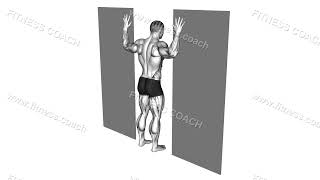
Doorway Chest Stretch
A standing flexibility exercise that uses a doorway to lengthen the chest and front-shoulder region. It is a simple upper-body mobility variation requiring only a stable door frame.
Core · Intermediate
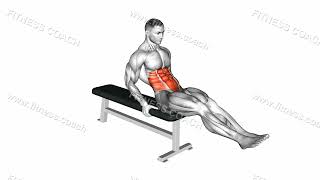
Seated Bench Knee Tuck
A bodyweight core exercise performed at the end of a flat bench with the hands gripping beside the hips. Both knees draw toward the torso as the trunk moves forward, followed by leg extension and a controlled recline, combining hip flexion with abdominal control.
Legs · Intermediate
Plyo side lunge
A dynamic exercise that combines lateral lunges with a plyometric jump, targeting the glutes, quadriceps, hamstrings, and inner thighs. It enhances lower body strength, agility, and balance while providing a cardiovascular challenge.
Abs · Beginner
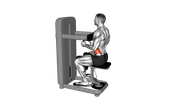
Seated Machine Trunk Rotation
An isolation exercise targeting the oblique muscles of the core. It involves rotating the torso against resistance while seated, helping to improve core strength and stability.
Legs · Intermediate
Glute-Ham Raise 1/2
A strength exercise targeting the posterior chain, specifically the glutes, hamstrings, and lower back. It involves lowering the body from a kneeling position to a horizontal position and returning halfway up, focusing on eccentric control and muscle activation.
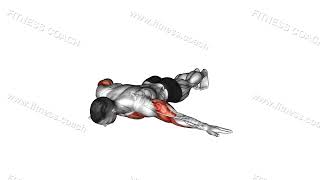
Chest · Intermediate
Archer Push-Up
An advanced bodyweight pressing variation with asymmetrical loading between the arms. It develops chest, triceps, and shoulder strength while demanding trunk stability.
Legs · Intermediate
Sumo Squat
A lower body exercise that targets the quadriceps, hamstrings, glutes, and inner thighs. It involves a wider stance than a traditional squat, which emphasizes the adductor muscles and provides a different angle of engagement for the lower body muscles.
Chest · Intermediate
Clap Push-Up
The Clap Push Up is an advanced plyometric exercise that enhances upper body strength, explosiveness, and coordination. It primarily targets the chest, triceps, and shoulders, while also engaging the core for stability.
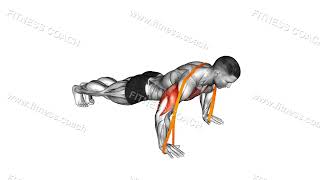
Chest · Intermediate
Resistance Band Push-Up
A push-up variation with elastic resistance added across the upper body. The band increases pressing demand for the chest, shoulders, and triceps compared with bodyweight alone.
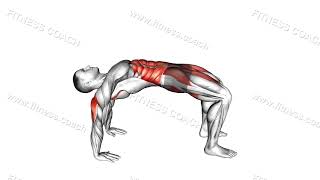
Glutes · Beginner
Crab Pose
A reverse tabletop hold supported by the palms and feet, with bent knees and elevated hips. Hip extensors maintain the raised pelvis while the arms and shoulder girdle support bodyweight behind the torso.
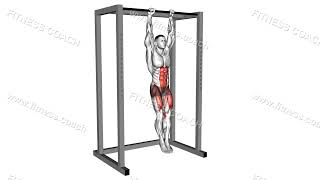
Abs · Intermediate
Hanging Straight Leg Raise
A bodyweight hip-flexion exercise performed from a shoulder-width overhand hang on a straight bar. The straight legs rise to approximately horizontal, with the hip flexors producing the lift and the abdominal muscles controlling the pelvis.
Legs · Beginner
Hip Circles
A dynamic warm-up exercise that targets the hip joints, improving flexibility and mobility.
Glutes · Intermediate
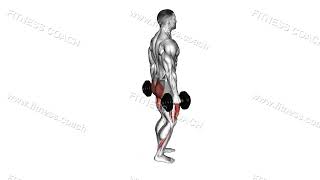
Dumbbell Rear Lunge
An alternating reverse-step lunge with two dumbbells hanging at the sides in a neutral grip. Each backward step and return to feet together loads the quadriceps and gluteal muscles, with the standing leg and trunk controlling balance before the opposite side begins.
Glutes · Intermediate
Back Extension
Targets the lower back muscles, specifically the erector spinae. It also engages the glutes and hamstrings. This exercise is typically performed on a hyperextension bench or Roman chair, allowing for controlled extension and flexion of the spine.
Legs · Intermediate
Crossack Squat
The Cossack Squat is a lower body exercise that targets the muscles of the legs, particularly the quadriceps, hamstrings, glutes, and adductors.
Glutes · Beginner
Standing Hip Abduction
An exercise targeting the gluteus medius and minimus muscles, as well as the tensor fasciae latae. It helps improve hip stability and strength, which is essential for various athletic activities and daily movements.
Chest · Beginner
World’s Greatest Stretch
The World's Greatest Stretch is a dynamic exercise that targets multiple muscle groups, enhancing flexibility, mobility, and overall functional movement. It is particularly effective for warming up the body before a workout, focusing on the hips, hamstrings, thoracic spine, and shoulders.
Triceps · Intermediate
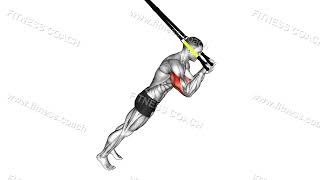
Suspension Triceps Extension
A bodyweight elbow-extension exercise with the hands supported by suspension handles and the feet on the floor. The forward lean loads the triceps while the trunk and shoulder girdle maintain the body's alignment.
Glutes · Beginner
Glutes Roll
A self-myofascial release exercise targeting the gluteal muscles. It involves using a foam roller to apply pressure to the glutes, helping to release tension, improve flexibility, and enhance muscle recovery.




About these exercises
They're the easiest way to train at home or on the road, and the base skill that weighted work builds on later. Difficulty comes from leverage, tempo and range rather than load: a slower descent or raised feet turns a familiar move into a harder one. Start with the ones you can do cleanly and progress when the reps come easily.